
Hi everyone, thanks for coming back to Customer Futures.
Each week I unpack the disruptive shifts around Empowerment Tech. AI Agents, digital wallets, Personal AI in and the future of the digital customer relationship.
If you haven’t yet signed up, why not subscribe:
Watch: Modernising government services… with digital ID and verifiable credentials
I’m hosting a new series of digital ID webinars with iDen2 and Carahsoft, starting with a look at digital ID in government.
We’ll be talking about digital wallets and verifiable credentials as a fresh, practical way to improve citizen trust, lower fraud, reduce inefficiencies and enable secure, reusable digital ID across government programmes.
We’re live on Wednesday May 27 at 1pm Eastern Time.
You can register for the online event here.
Hi folks,
I’ve been chewing on this one for some time.
There’s a saying that every business does one of two things. You are either bundling, or you are unbundling.
The great AI shift is about to do something fascinating with both. But unless you stand back, you can’t see it. So today I want to show you what’s coming with digital identity, and why.
We walk through
The great smartphone convergence
Why it’s about to happen again
An old truth about convergence
Different businesses are starting from different places
The Great Convergence (modern edition)
What this means
It’s never been more important to understand the future of the digital customer. Welcome back to the Customer Futures newsletter.
Grab a fresh peppermint tea, a comfy seat, and Let’s Go.
The great smartphone convergence
Before the iPhone was launched in 2007, we used to have to carry around a bunch of different things. A radio, a camera, a torch, a calculator, a phone, an MP3 player, and much more.
Each tool did one job. And each lived in its own world. Then hardware and software caught up, and bundling them made them portable, together.
Remember, the iPhone didn’t replace the fancy big DSLR cameras with professional lenses. It just gave us a good enough camera we could carry everywhere.
Likewise, the radio wasn’t replaced. But it made listening anywhere possible, with a neat new touch interface. And the mobile didn’t replace the torch. It just made light available when and where you needed it.
A hundred different tools melted into one interface.
A inevitable convergence.
It’s about to happen again
This time, it’s not hardware features collapsing into a phone. Rather, it’s about four digital capabilities that have developed independently over two decades.
And are now being pulled together:
Identity to prove who you are
Wallets & credentials to carry entitlements
Context & profiles to understand your needs and history
AI agents to act on your behalf
Each has evolved independently. And each has become important in its own right.
But they no longer work on their own. Unlike the iPhone, this convergence isn’t about convenience. It’s about interdependence:
Identity without context is blind
Context without identity is untrusted
Agents without either can’t act (or at least are clumsy)
Wallets without agents or context don’t do anything useful
These capabilities need each other.
Which is why they’re being pulled together into a single customer-side layer. A new operating system for the individual.
And it’s happening everywhere you look.
Which brings us to an old truth about convergence
Jamie Zawinski once said:
“Every program attempts to expand until it can read mail. Those programs which cannot so expand are replaced by ones which can.”
It’s so obvious once you see it. The idea that all features expand until they integrate with email.
But Zawinski wasn’t really talking about email. He was pointing at a kind of gravitational pull, something every product drifts towards eventually because it solves a universal need.
In Web1, that gravity was contacts. Please tell us who you know. In Web2, it was communication. You knew a platform had matured when it touched email.
Here’s my bet: In the agentic era, the gravitational centre is identity.
And so here’s a new Jamie’s Law:
“All technology platforms eventually expand until they require identity - digital reputation, authority, and verifiable context.”
This is the new convergence.
The same way every device became a phone, every modern platform is becoming an identity system. And as soon as a product tries to automate, personalise, or act on your behalf, it hits the same unavoidable questions:
Who is this for?
Can the action be trusted?
What does the user intend?
What are they allowed to do?
What is the right behaviour in their context?
You can’t answer these questions with more and more interfaces. Nor can you with more and more APIs. Or more and more LLMs.
Only identity, context and proof of authority (i.e. delegation) can.
Identity becomes the final - converging - dependency.
Different businesses are starting from different places
Once you see identity, context and delegation as the new centre of gravity, you see the competitive landscape in a completely new way. And the latest company moves and developments snap into focus.
Why?
Because every major player begins from one of three starting points, and each starting point shows you what they’re missing.
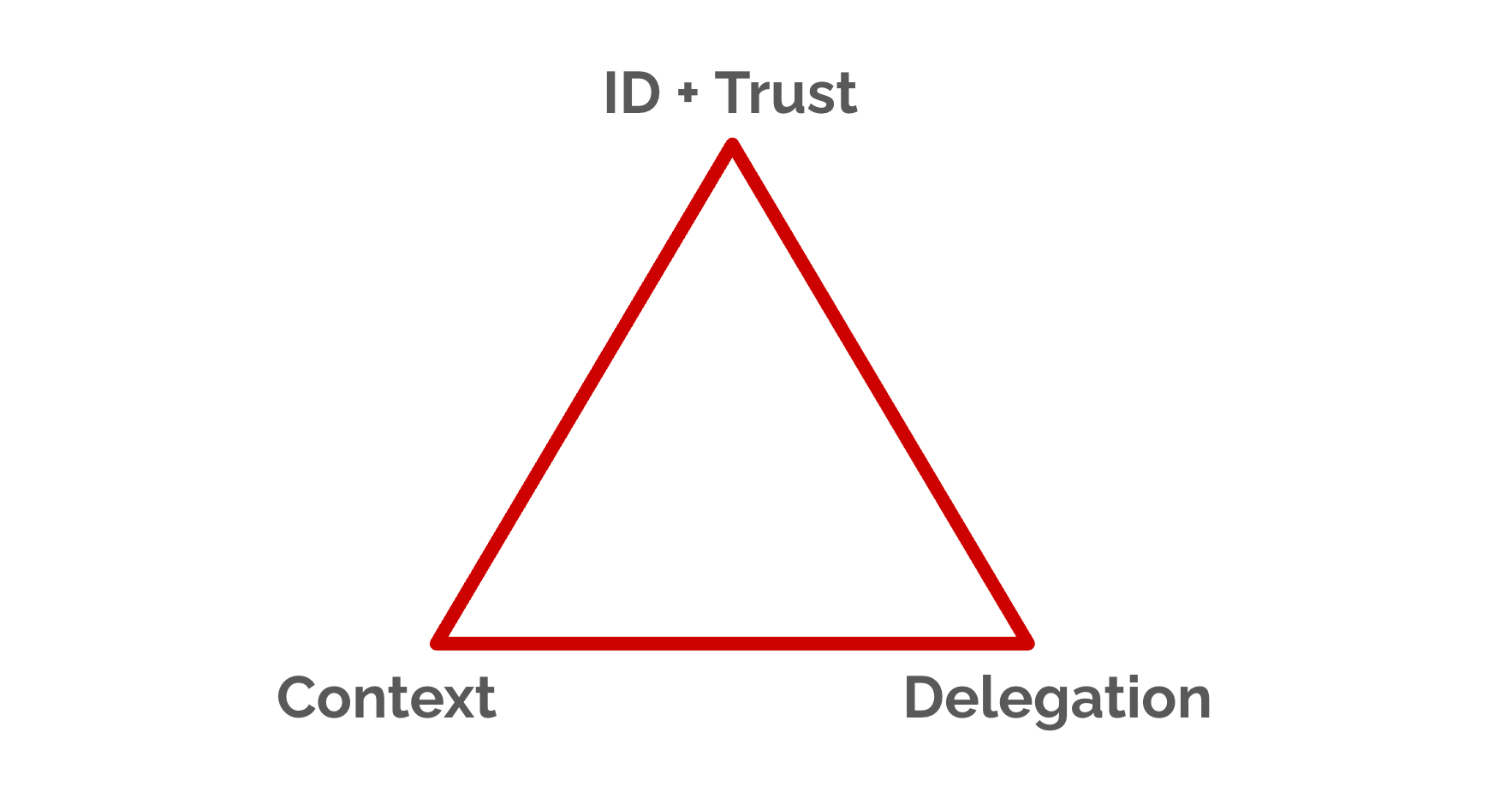
Different strengths. Different blind spots. Yet the same trajectory towards the three pillars. The winners will be those who assemble the full stack fastest:
Context + Identity + Agents (Delegation)
It’s how we frame all our work at Trusted Agents.
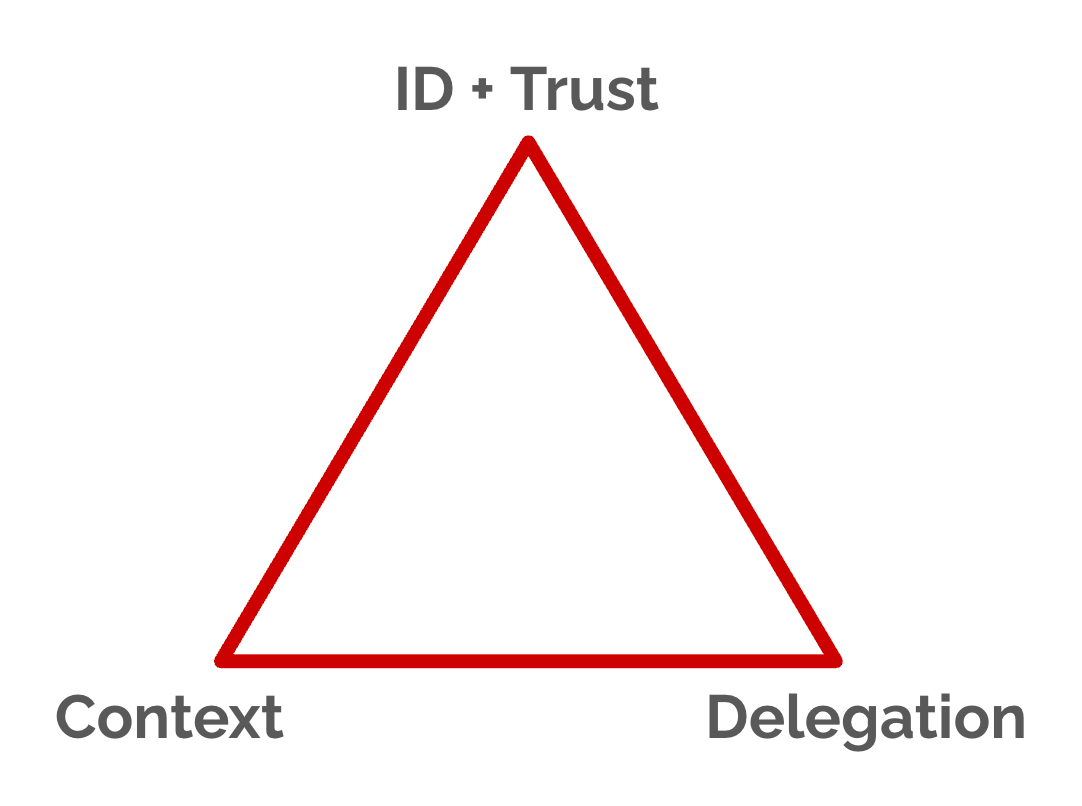
Here’s how I see the race lining up:
1. The AI-First Players
OpenAI, Perplexity, Anthropic and so on.
They began with breakthrough models. They have the most capable agents, able to reason, plan and act. But they’re missing the two prerequisites for trusted action:
Identity: who the agent is acting for
Context: what the user knows, prefers, intends or allows
Which is why you can see them urgently adding:
Memory
Personal clouds and data stores
User permissions
Account-level authority
Policy and safety frameworks
You see, LLMs need identity and context to become fully agentic. Yes, they have capability. But they don’t have the core foundations for digital trust.
2. The Wallet & Identity Players
Apple Wallet, Google Wallet, eIDAS2 wallets, identity providers etc.
They all began with the strongest core features:
Verified identity
Credentials and proofs
Entitlements
They already have tools to know who you are, and can then prove what you’re allowed to do. But they don’t yet have deep personal context or AI agents that act on your behalf.
So they’re adding:
On-device intelligence
Personal agents
Richer data stores
AI plugins to access other data ecosystems and services
The wallets give them trust. Agents give them behaviour. And context makes the whole system usable.
3. The Context & Relationship Players
Banks, retailers, insurers, telcos, marketplaces and so on
They began with the richest customer relationships - and critically, customer understanding:
Spend
History
Behaviour
Needs
Preferences
Life context
So they’re now adding:
AI copilots
Customer service agents
Automated decisioning
Personalisation engines
But remember, they’re still missing:
Identity infrastructure that carries authority beyond their walls
Wallets and proofs to let their agents act in other systems
Yes, their AI can advise. But it struggles to act elsewhere without portable identity and verifiable authority. They have context… but no portability.
The three primitives everyone needs
Regardless of where they start, every company ends up needing the same three foundational components.
It’s what I’ve been talking about as the pillars of Empowerment Tech.
1. Data Store (context)
Memory, preferences, behaviour, intent, history and all sorts of other customer context that is useful in a transaction.
2. Digital Wallet (identity and proofs)
Who you are, what you can prove, what authority you carry.
3. AI Agent (delegation)
Acts on your behalf, uses your context, follows your intent, and can be bound to a natural person.
Every platform starts with one of these. But every platform eventually needs all three.
The Great Convergence (modern edition)
So here’s what we are seeing:
AI players adding identity + context
Wallet/ID players adding agents + context
Data and context (the ‘customer relationship’) players adding agents + identity infrastructure
And so everyone is moving toward the same architecture: Context + Identity + Agents
Not because of convenience, but because each capability relies on the others. This new convergence is driven by necessity.
What this means
I believe three related shifts will define the next decade:
1. Identity becomes infrastructure
Everything that acts on your behalf requires verifiable authority. Identity and trust stop being products and features to bolt on, and become woven into every touch point, every transaction, and every customer moment.
2. Wallets become the new data layer
They carry reputation, entitlements, proofs, state and get bound to real people and organisations so we can prove who belongs to what.
3. Agents become the new users
Software that interacts with other software on our behalf (OBO).
Now, zoom out and you’ll actually see that the starting point doesn’t matter. Because the direction of travel - towards Empowerment Tech - is already set.
The last era converged on communication, but this next one converges on identity.
And the new Jamie’s Law:
All technology platforms eventually expand until they require identity - digital reputation, authority, and verifiable context.
And once again, many different tools will melt into one interface. One customer interaction.
It’s the next inevitable convergence, but this time organised around digital identity and trust.
So are you ready?
And that’s a wrap. Stay tuned for more Customer Futures soon, both here and over at LinkedIn.
And if you’re not yet signed up, why not subscribe:
What a fantastic analysis of the way forward, so well explained that even the least technical of us can understand it as a vision for the future.